

Cape Town continues to grow, attracting new residents, businesses and investment while changing the way people think about property.
Increasingly, the decision to buy a home, lease an office or invest in property is influenced by much more than the building itself. Buyers and businesses are looking at what surrounds a property: access to amenities, transport, green spaces, recreation, security, convenience and the quality of everyday life.
This shift is placing greater emphasis on mixed-use property development and thoughtfully planned precincts that bring the different parts of daily life closer together.
For Rabie Property Developers, this approach has been central to almost five decades of property development in Cape Town and the Western Cape.
Founded in 1978, Rabie has evolved from developing individual residential projects into creating and shaping large-scale neighbourhoods where homes, workplaces, retail, recreation and public spaces work together.
The result is an approach to property development built around a simple principle: people do not experience buildings in isolation. They experience the places and communities around them.
Why mixed-use developments are becoming increasingly important
The expectations people have of property have changed considerably.
Homebuyers increasingly value convenience, walkability, security and access to lifestyle amenities. Businesses are reconsidering what their offices need to offer employees in a hybrid working environment. Retirees are looking for independence, community and an active lifestyle rather than simply a place to live.
Mixed-use developments respond to these changing expectations by bringing complementary uses together within a connected environment.
When residential, commercial, retail, recreation and green spaces are thoughtfully integrated, each component can strengthen the others.
Residents create activity outside traditional working hours. Offices support restaurants and retailers. Green spaces make higher-density environments more appealing. Schools, healthcare, gyms and everyday services reduce the need for unnecessary travel.
Over time, a property development becomes something more valuable: a neighbourhood.
Century City: long-term precinct development in action
Century City is perhaps the clearest example of Rabie’s long-term approach to precinct development.
Over more than three decades, Century City has evolved into one of Cape Town’s most established mixed-use precincts, combining residential communities, commercial property, hotels, schools, shopping, restaurants, recreation, public transport and extensive green spaces.
Importantly, the precinct has continued to evolve as the needs of the people using it have changed.
The transformation of the former Ratanga Junction site demonstrates this approach particularly well.
When the theme park closed, the opportunity was not simply viewed as another piece of land available for redevelopment. Instead, Rabie considered what the next generation of Century City would require.
Ratanga Park emerged as the green and water-based centrepiece of a new neighbourhood.
Around it, residential developments including Nine Palms, On Park, Park Place and The Bridges have progressively added homes to an environment centred around nature, recreation and walkability.
The transition from Ratanga Junction to Ratanga Park reflects a broader shift in what buyers increasingly value from urban property: access to green space, security, connectivity, recreation and the ability to enjoy more of everyday life close to home.
It also illustrates an important principle of successful property development. Great precincts cannot remain static. They need to continue adapting as cities, lifestyles and markets change.
Rabie is now progressing plans for Century City’s last major undeveloped pocket of land, where residential, commercial and lifestyle uses are expected to come together as part of the precinct’s next chapter.
Commercial property has become about more than the office
The same changes are visible in Cape Town’s commercial property market.
Hybrid and remote working have transformed the relationship between employees and the workplace. For many businesses, the office is no longer simply somewhere employees need to be. It needs to support collaboration, culture, connection and productivity.
That means the environment surrounding an office has become increasingly important.
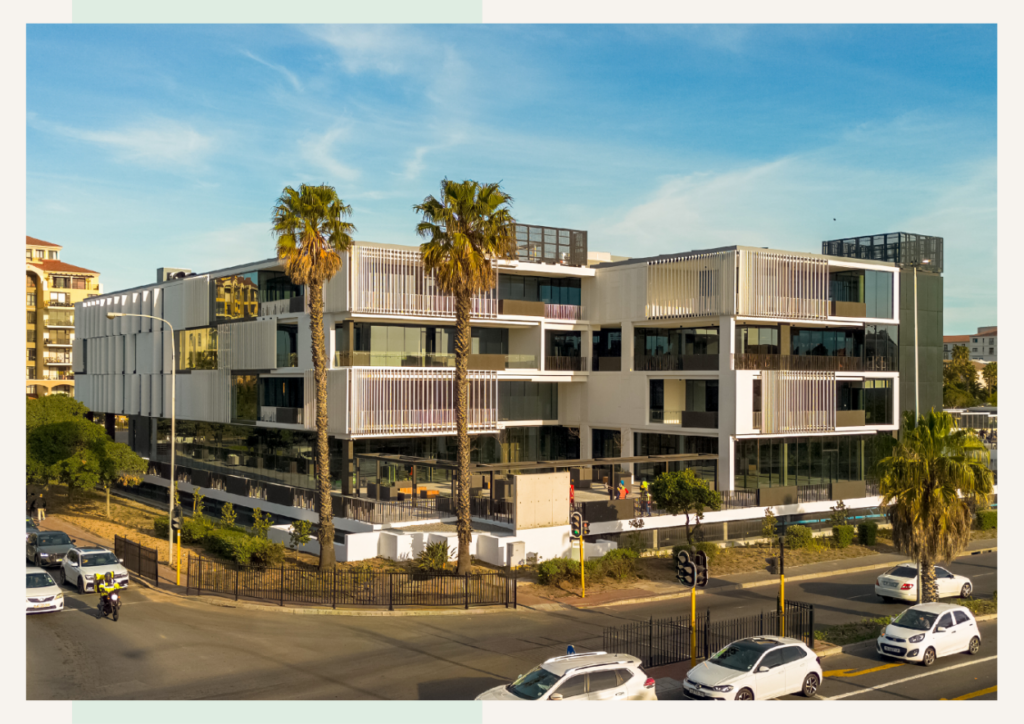
Within Century City, commercial buildings form part of a broader ecosystem.
Employees can access public transport, restaurants, shops, gyms, landscaped spaces and everyday services within the precinct. Pedestrian routes connect different parts of Century City, while transport infrastructure links it to the wider Cape Town metropolitan area.
This type of amenity-rich commercial environment gives businesses another way to create value for employees.
Rabie’s recent commercial developments reflect that demand. Continuity House has attracted strong tenant interest, following the success of Junxion Park.
The appeal is about more than office space. It is about providing workplaces within an environment that supports the entire working day.
Burgundy Estate: building a neighbourhood over time
While Century City demonstrates mixed-use development at metropolitan scale, Burgundy Estate shows how the same principles can shape a residential neighbourhood.
Rabie became involved in Burgundy Estate in 2015 with an ambition that extended beyond adding more housing.
The goal was to help develop a complete, multi-generational neighbourhood.
Today, Burgundy Estate combines apartments and houses with schools, shopping, restaurants, recreation, green spaces, security, everyday services and retirement living.
Families, young professionals, first-time buyers and retirees are able to live within the same broader community, supported by amenities that have developed alongside the residential offering.
Projects such as Finwood and Ashmere form part of the final stages of Rabie’s residential development within the estate, adding new homes to a neighbourhood whose identity, infrastructure and amenities are already well established.
It demonstrates one of the advantages of long-term property development: value is created not only within individual projects, but through everything that develops around them.
Extending placemaking into retirement living
The question of what makes a good place to live does not disappear at retirement.
For many modern retirees, independence, security, activity and social connection have become central to choosing where and how they want to live.
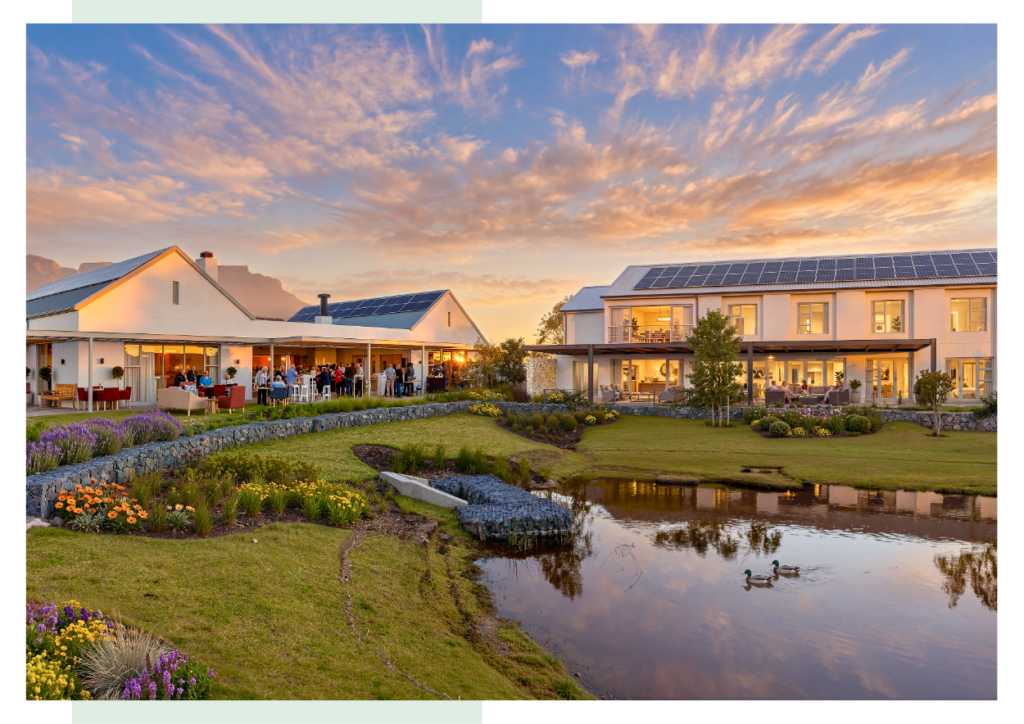
Rabie’s Oasis Life retirement communities apply many of the same principles found in its larger precinct developments.
Rather than treating retirement property as an isolated housing product, Oasis Life brings together thoughtfully designed homes, lifestyle amenities, healthcare, security and opportunities for community and connection.
Established communities such as Oasis Life Clara Anna Fontein and Oasis Life Constantia have demonstrated the appeal of this approach.
Oasis Life Burgundy Estate extends the model within an established multi-generational neighbourhood, while Oasis Life Sunningdale continues to grow into a thriving community of its own.
The model reflects the broader philosophy behind Rabie’s developments: property performs best when it supports the way people actually want to live.
Taking Rabie’s property development approach further across the Western Cape
While Century City and Burgundy Estate are among Rabie’s best-known precincts, the company’s development activity increasingly extends into other parts of the Western Cape.
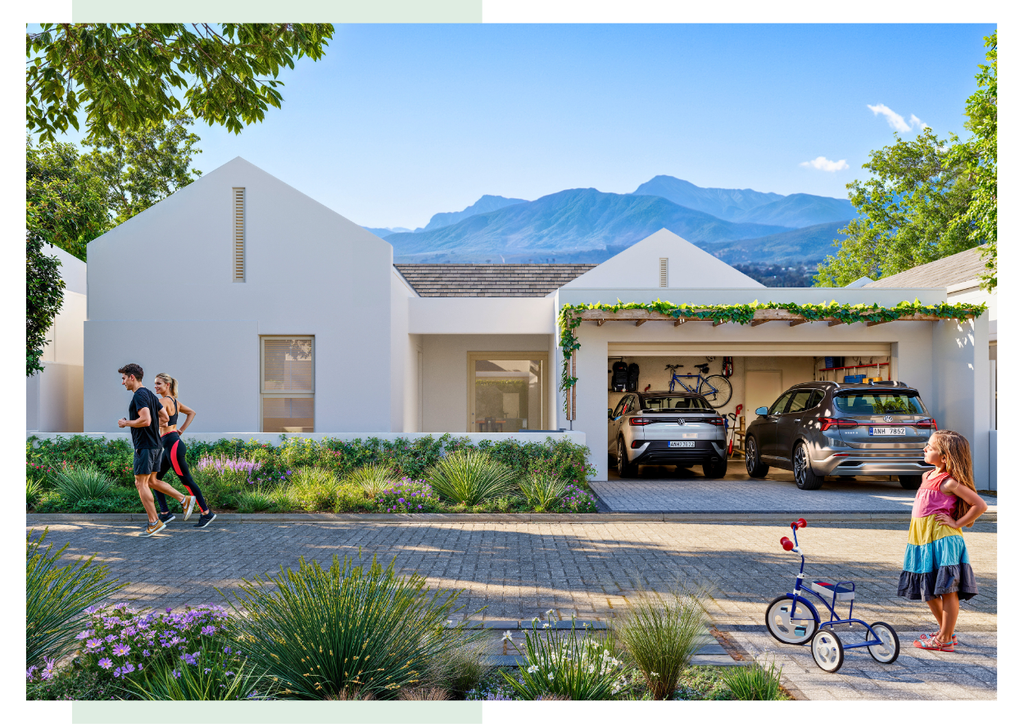
In Paarl, Le Boutonne has brought Rabie’s approach to secure residential development into the Cape Winelands, combining considered planning with lifestyle and long-term residential value.
Stonepine Crescent in Kuils River represents another growing residential community being developed progressively over time.
The locations, scale and target markets may differ, but the underlying development philosophy remains consistent.
The question is not simply what can be built on a piece of land.
It is what kind of environment will allow the people living there to thrive over the long term.
The future of property development in Cape Town
Cape Town faces both opportunity and pressure as the city continues to grow.
Land is increasingly constrained, infrastructure needs to work harder and people expect greater convenience from the places where they live and work.
That makes thoughtful urban planning and mixed-use development increasingly important.
The opportunity is not simply to increase density. It is to use land more intelligently by creating connected environments where housing, employment, services, recreation and nature can coexist.
For developers, this requires a long-term view.
Property markets will change. Buyer expectations will evolve. Ways of working will continue to shift. Successful precincts need to be able to respond without losing the qualities that make them desirable places to live, work and invest.
After almost five decades of property development, Rabie’s approach remains rooted in that long view.
From Century City and Burgundy Estate to Oasis Life, Le Boutonne and Stonepine Crescent, the objective extends beyond individual buildings.
It is about creating places where communities can develop, businesses can thrive and everyday life can happen more easily.
Because ultimately, the value of property is shaped by much more than what happens inside its four walls.
Stay informed about Rabie’s latest developments
Stay up to date with Rabie Property Developers and be among the first to hear about new developments, property launches and news from across our precincts and communities.
Sign up to receive the latest Rabie news and development updates.